Bolzano, 11 September 2026
How do you identify a case suitable for a representative action? Who collects evidence and information from potentially thousands of affected consumers? How can a multi-year legal proceeding be financed? And how can consumer organisations reach the people affected by a case?
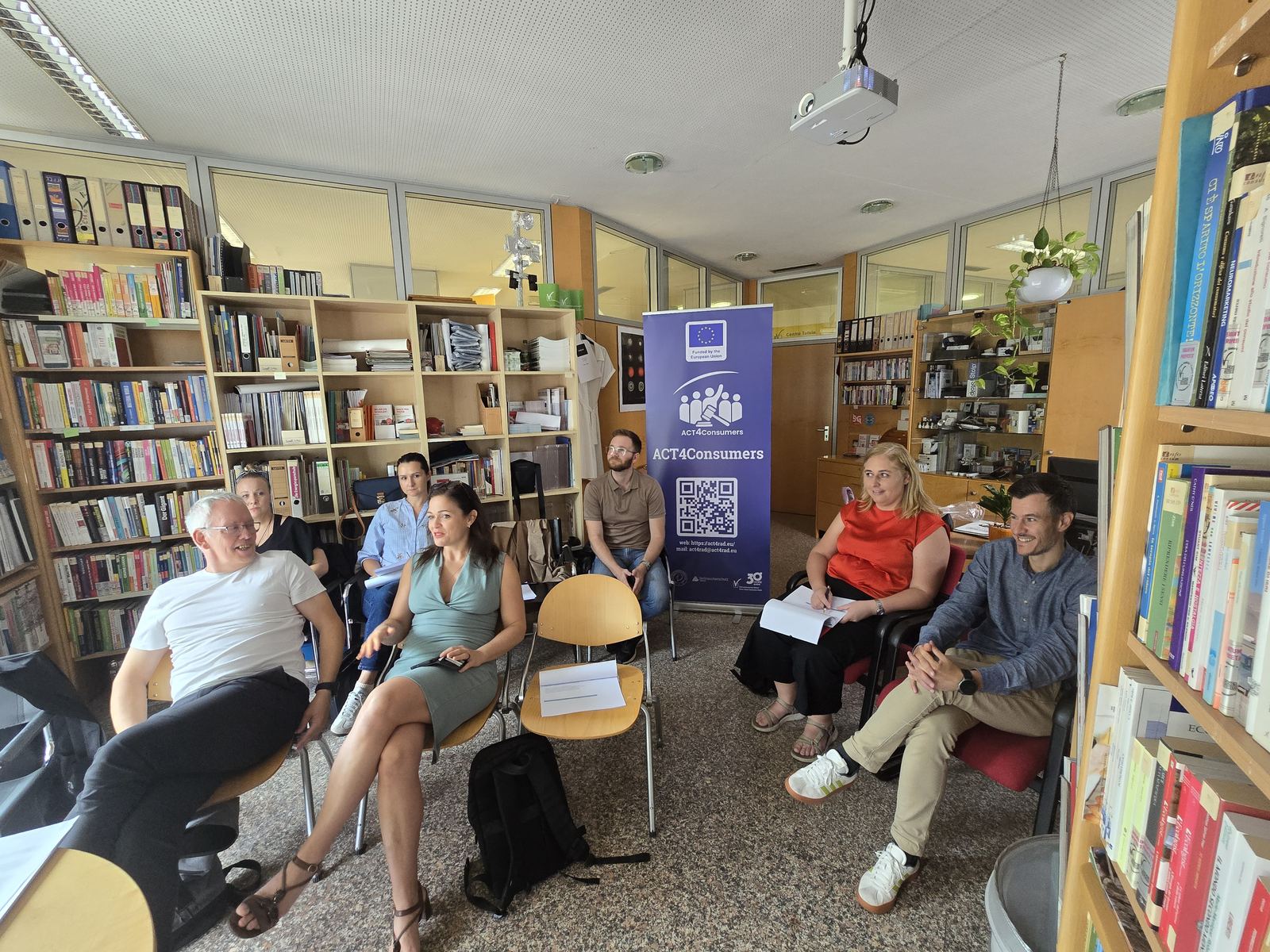
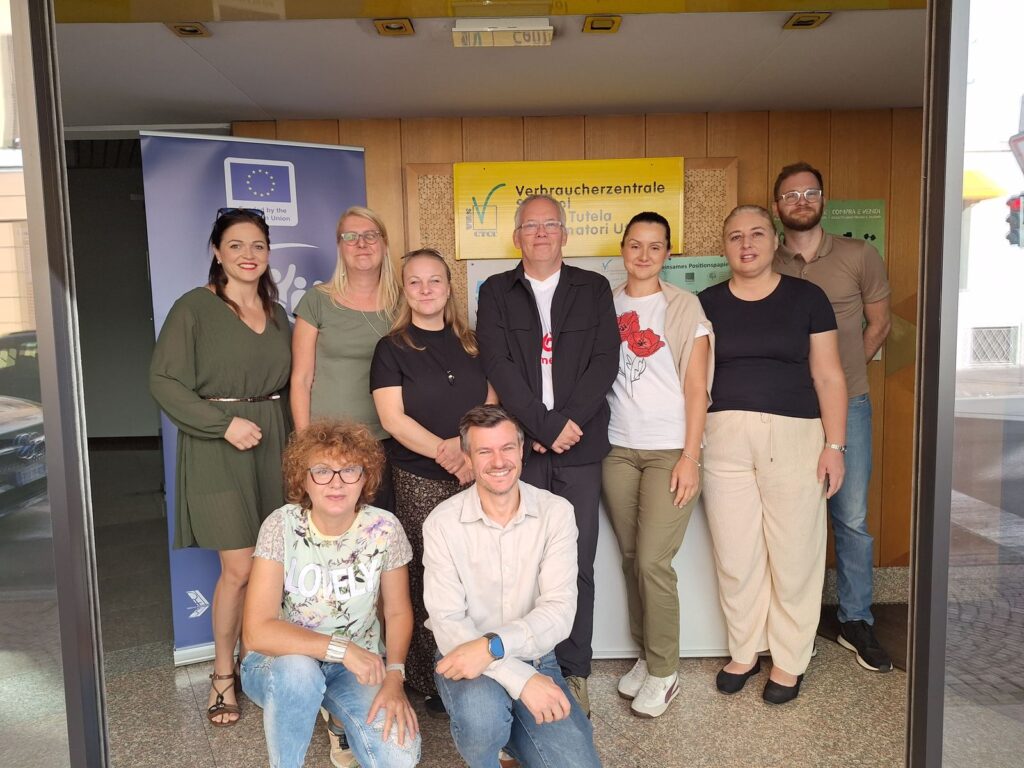
These were some of the key questions discussed during the ACT4Consumers study visit in Bolzano, Italy, held from 9 to 11 September 2026.
Hosted by the Italian Centro Tutela Consumatori Utenti (CTCU), the three-day study visit brought together representatives of the Croatian Qualified Entities Društvo Potrošača Međimurja (DPM) and Društvo Potrošačica (Female Consumer Club – FCC), together with the Austrian Verbraucherschutzverein (VSV).
The study visit focused on the practical aspects of representative actions and collective redress, moving beyond the legal framework to the experience of organisations that have already handled collective proceedings.
From legal provisions to real proceedings
Directive (EU) 2020/1828 established a European framework for representative actions aimed at protecting the collective interests of consumers. Croatia has transposed the Directive into national legislation and designated Qualified Entities that can bring representative actions.
However, having a legal possibility to bring an action does not automatically mean having the capacity to conduct a complex collective proceeding.
This was one of the central messages of the study visit.
VSV presented its practical experience throughout the lifecycle of a collective action — from assessing whether a case is suitable for collective proceedings and gathering evidence, to working with affected consumers, financing the action, managing proceedings, reaching settlements and communicating with the public.
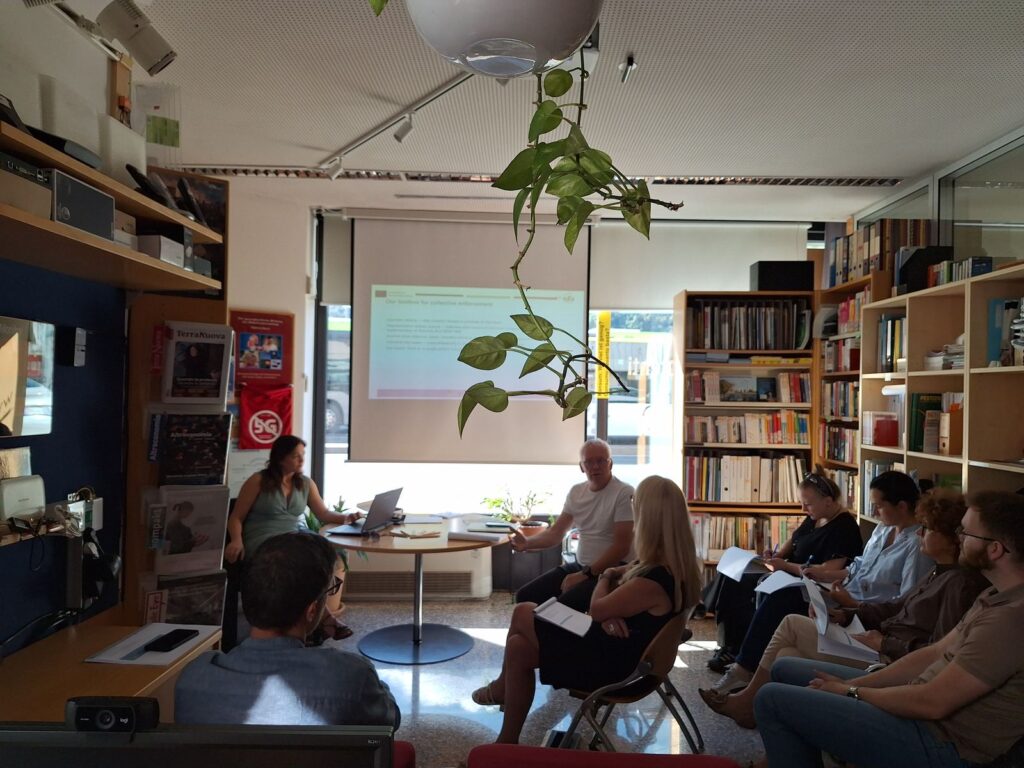
“Preparing and bringing a collective action requires the capacity to assess a case, collect evidence, work with consumers, finance the proceedings and communicate. Court proceedings are only one part of the entire process.”
Daniela Holzinger, VSV, Austria
Financing can determine whether a case can move forward
A significant part of the exchange focused on the financial risks associated with collective proceedings and possible funding models.
VSV presented its experience with third-party litigation funding, whereby specialised funders finance legal proceedings, as well as the role of legal expenses insurance available in Austria.
The discussion also highlighted the importance of transparency towards consumers about how a collective action is financed and what share of any compensation may be allocated to the funder.
“Consumers must be clearly informed how a collective action is financed and what part of the compensation goes to the funder. In the model we presented, around 35% of the amount a consumer receives after a successful proceeding goes to the third party that financed the collective action.”
Sebastian Reinfeldt, VSV, Austria
For Croatian organisations, access to sustainable financing remains an important challenge. While the Croatian legal framework allows third-party funding of representative actions under certain conditions, specialised practice and a developed litigation-funding market are still at an early stage.
Learning from Italy: collective actions, visibility and communication
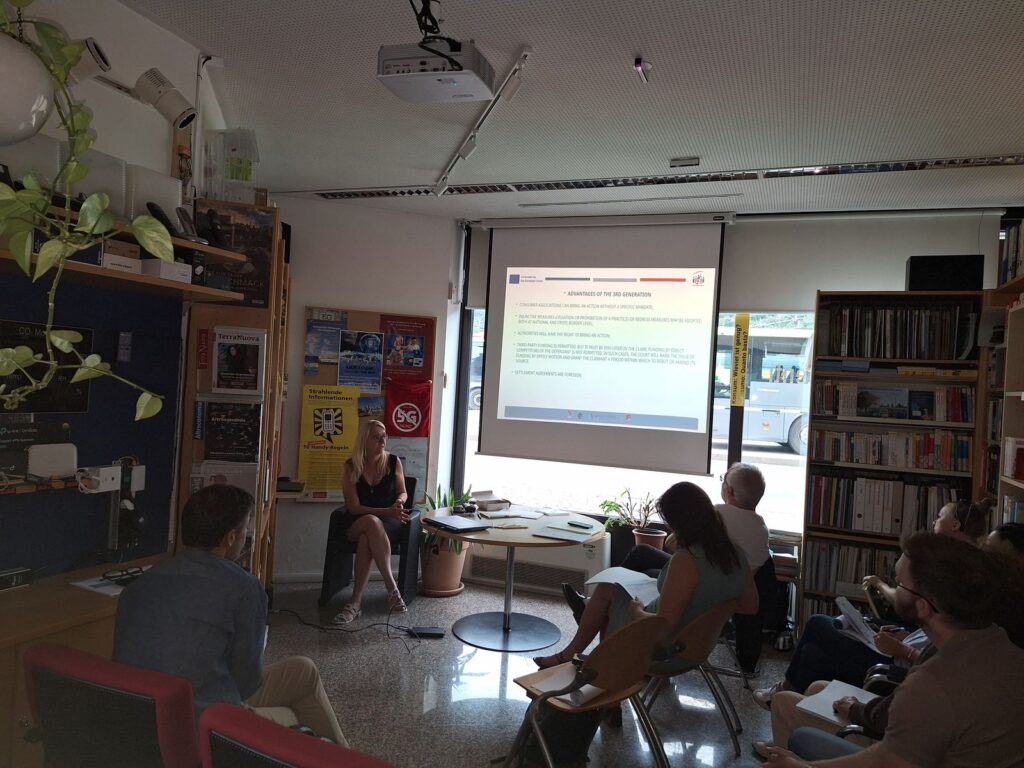
As host organisation, CTCU presented the Italian experience with collective consumer protection, including the Italian register of collective actions, the monitoring of proceedings and experience with cross-border consumer protection.
The visit also highlighted the importance of long-term relationships with journalists and the media.
“CTCU has been developing relationships with journalists for decades. This enables information about consumer rights and collective proceedings to reach the public and affected consumers quickly.”
Gunde Bauhofer, CTCU, Italy
CTCU also presented practical experience related to the Meta/Facebook case concerning the collection of users’ personal data. Such cases demonstrate how representative actions can address problems affecting large numbers of consumers and how legal strategy, evidence, consumer involvement and communication are interconnected.
Different resources, common challenges
The study visit also opened an important discussion about the organisational capacity needed to conduct collective actions.
Compared with their Italian and Austrian counterparts, Croatian consumer organisations operate with significantly more limited human and financial resources. In Croatia, insufficient and project-dependent funding makes it difficult for consumer organisations to maintain the specialised legal, administrative and operational capacity required for complex collective proceedings.
“One of the important observations from the study visit is that consumer protection and the interests of business are institutionally positioned differently in Austria and Italy than in Croatia. We believe that the fact that consumer protection in Croatia falls under the Ministry of Economy is one of the key obstacles to developing a strong, independent and effective consumer protection system.”
Gordana Lukić, Društvo Potrošača Međimurja, Croatia
For ACT4Consumers partners, this comparison underlines that strengthening representative actions in Croatia requires more than legislation.
“This comparison clearly shows that collective consumer protection is not only a matter of legislation. If representative actions in Croatia are to become genuinely effective, Qualified Entities need people, legal expertise, financial resources and institutional support.”
Ana Smoljak, Female Consumer Club, Croatia
Learning through real cases
One of the strongest lessons from the Bolzano study visit was the value of learning from organisations that have already gone through the practical challenges of collective proceedings.
The exchange with VSV and CTCU provided the Croatian partners with an opportunity to examine how cases are selected, how evidence and affected consumers are managed, how funding and litigation risks are addressed, and how communication can support a collective action.
The study visit therefore represents an important step in ACT4Consumers’ broader objective: strengthening the operational and legal capacity of Croatian Qualified Entities to use representative actions effectively.
What comes next?
The Bolzano study visit is part of the ACT4Consumers – Capacity & Tools for Collective Actions project, bringing together consumer organisations from Croatia, Austria and Italy to strengthen practical capacity for representative actions and collective redress.
The partners will continue working on practical tools and guidance, educational materials, legal analysis and further knowledge exchange.
The next study visit will take place in Vienna, where the Croatian partners will continue learning from VSV’s practical experience with collective proceedings.
ACT4Consumers – Capacity & Tools for Collective Actions
Project No. 101266409
May 2026 – April 2028
Co-funded by the European Union under the Single Market Programme.
Project consortium:
Društvo Potrošačica (Female Consumer Club – FCC), Croatia – Coordinator
Društvo Potrošača Međimurja (DPM), Croatia – Project Partner
Verbraucherschutzverein (VSV), Austria – Project Partner
Centro Tutela Consumatori Utenti (CTCU), Italy – Associated Partner